

Home > showlist
The best tool for grinding a wide range of materials is a pabrik bal planet energi dhuwur. The capability of this kind of mill to grind and homogenize samples at low to moderate temperatures is one of its advantages. Additionally, it is appropriate for many applications, including those in the chemical and pharmaceutical industries.
A. Khataee and his colleagues have studied the preparation of sono-Fenton nanocatalyst from natural martite for high energy planetary ball milling. The objective of the current study was to characterize the sono-photo-Fenton process used to mineralize phenol and to analyze the degradation of phenol derivatives.
Total organic carbon content (TOC) and dissolved solids content in aqueous solution were used in this study to describe phenol. Synthetic air was used as the carrier gas in an analysis using the Shimadzu TOC-VCSN.
The adsorption isotherm model and pseudo-second order kinetics were used to assess how the dyes degraded. It was discovered that the pH and initial ferrous ion concentration had a significant impact on how effectively the dye was removed from rega ball mill planet. However, under normal circumstances, the degradation was effective.
Ultrasonic irradiation was used to increase the Fenton reaction's effectiveness. Shear stresses at the cavitation interface can be created using this technique, as well as vibrational wave energy. It is also possible to create regions with high pressure and temperature using ultrasonic irradiation.
Numerous nanoparticles were created in order to study the Fenton reaction. For instance, sonochemical synthesis was used to create zinc oxide nanoparticles that were doped with neodymium and Gd. These nanoparticles were applied in a heterogeneous process similar to sono-Fenton.
Investigations were also conducted on the sonocatalytic ozonation of a mixture of pharmaceuticals in the presence of immobilized TiO2 nanoparticles. This technique's effectiveness was contrasted with that of photocatalytic ozonation, which supported TiO2 nanoparticles.
The outcomes demonstrated that the sono-Fenton-like process benefited from the use of martite nanoparticles. The catalyst's surface improved the dyes' ability to bind to it. Additionally, the SF catalyst can absorb more cationic dyes.

Tadalafil oral liquid preparation with improved solubility, dissolution rate, and bioavailability is the subject of the current invention. Tadalafil and a surfactant are included. It might also include an additive that is acceptable for use in medicine. Its total dosage ranges from 2 to 10 g per unit dosage form.
A physicochemically stable tadalafil solution that is dissolved in diethylene glycol monoethyl ether and diluted in a buffer solution with pH 1.2 and purified water makes up an oral liquid preparation of tadalafil in accordance with the present invention. A surfactant, which may be nonionic or anionic, is also present in this formulation. Additionally, when tadalafil is coprocessed with a hydrophilic polymer, its solubility is significantly increased.
This formulation also has quick drug efficacy and good dilution stability. As a result, this medication has a wide range of pharmacological applications. Tadalafil does not dissolve well in water, though. Therefore, to increase the bioavailability of the tadalafil, a high energy ball milling method can be used like in pabrik bal planet kanggo laboratorium. The tadalafil solution has excellent physicochemical and chemical stability, making it possible to prepare the oral liquid using a standard liquid preparation method.
X-ray powder diffraction was used to determine the tadalafil's properties (XRD). Additionally, the formulation's physicochemical stability and rate of dissolution were assessed. Finally, after two, four, and six months, the oral liquid was removed. After 2, 4, and 6 months, there was no recrystallization of the tadalafil in the oral liquid preparation of the present invention compared to the control drug.
Four rats received doses of the diluted tadalafil solution. Following oral administration of the oral solution containing tadalafil, blood concentration-time curves for each rat were obtained.
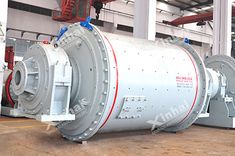
SPEX ball mills and planetary ball mills are two different kinds of ball mills. Although both mills can grind nanoparticles, they have different effects on particle size reduction. The SPEX ball mill grinds materials more quickly and with smaller particles than traditional ball mills.
In this study, two different types of ball millsu2014a planetary ball mill and a SPEX 8000 ball millu2014were used to create the intermetallic compound Al12Mg17. The microstructure and phase characterizations of the nanoparticles were compared.
Using a planetary ball mill, Al12Mg17 crystals with sizes between 85 and 180 nm were created. In contrast, the SPEX mill reported that the crystals were 12 nm in size. The powders' XRD results showed that the peaks' magnitudes had been decreased. It's possible that lattice strain was the cause of the decrease in particle size.
The temperature generated by the SPEX mill was higher than that of the planetary ball mill. At n osc = 15 s-1, a temperature of 30 degrees Celsius was recorded. However, neither the quantity nor size of milling balls had an impact on the temperature at the end from ball mill planet for sale.
The heating rate was also accelerated by higher n osc. There's a chance that using more milling balls causes more ball-ball collisions. More heat is consequently dissipated.
Additionally, higher n osc produces a stronger impact force. The result is a rapid deformation of the material.
Al12Mg17 nanoparticles were produced by both milling techniques. The nanoparticles were subjected to XRD analyses to ascertain their morphology and crystal structure. The XRD peaks in the planetary ball mill were not as broad, but the corresponding ones in the SPEX mill were more robust.
These findings imply that the SPEX 8000 ball mill is the best machine for producing tiny, spherical particles. Nevertheless, it's crucial to identify the ideal circumstances for each system.
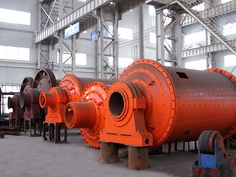
Planetary ball mills are employed in a number of sectors. They create powders with typical particle sizes of under 100 nm. Planetary ball mills have been utilized in mechanochemical methods recently. However, planetary ball mill operations are intricate and call for fine-tuning.
Understanding the dynamic aspects of high energy planetary ball milling is the goal of this study. Numerous numerical and experimental simulations are run. Investigated variables included operating frequency, revolution speed, and filling ratio.
Pressure-induced phase transformation inside of a steel vessel is constrained by a process called high energy planetary ball milling. Without the use of harmful mineralizers, this kind of process can be used to prepare nanostructured materials.
In this experiment, five balls were positioned around a basic Ti and C powder mixture that was put into a stainless steel vial. Argon was then used to seal the balls. By using DC magnetization and X-ray diffraction, the final samples were identified. The saturation magnetization and coercivity of these samples were good.
The study's experimental findings were supported by numerical simulations. The discrete element method was used to conduct these numerical simulations in order to study the ball's motion and forecast the flow of particulates. It was discovered that as friction coefficients increase, the motion of the simulated ball changes.
According to the study's findings, the effectiveness of planetary ball milling is significantly influenced by the size of the balls. For instance, results from milling with 0.1 mm and 2 mm balls are comparable. The collision's kinetic energy is lessened, though. The specific surface area of 1 mm balls is therefore greater than that of 2 mm balls in ball mill planet.
Tencan is a manufacturing center with an area of 22,000 square meters as well as an R&D center of 22,000 square meters for pabrik bal planet laboratorium.Tencan offers five product lines including over 40 models as well as more than 400 varieties of spare parts and accessories that meet all customers' needs in all respects. Tencan is the owner of more than 30 patents, and collaborates with 20 doctors from five of the most prestigious universities.
The main activity of the firm is equipment for powder manufacturing, powder technology, or powder materials. Our current main products include all kinds of laboratory planetary ball mills crushing and milling machines, screening, mixing & stirring equipment, and other laboratory equipment like gloves boxes, as well as other scientific research equipment.
The company is accredited through ISO9001, CE, SGS and other certifications. It also has more than 40 patents which are protected by independent intellectual property rights. The government has declared it an "high technology enterprise within the Hunan Province".
The main clients are research institutions, as well as technology-based businesses. We have more than 20,000 customers in 60 countries, and have exported to more than 60.
The process of high energy planetary ball milling is examined in the current work's dynamic and mechanical aspects. This process can produce mechanochemical changes that result in the formation of nanostructured materials. Contrary to the conventional CVT (conical-vesicular-triaxial) method, it does not call for hazardous mineralizers and poses no safety risks. It also offers a scalable path for synthesis.
When planetary ball milling with high energy, a significant amount of energy is added to the material. Therefore, based on the desired amount of the product, a specific milling dose can be determined. Other kinds of ball mills can use these results, too. Examining the ideal milling conditions for each system, though, is crucial. Additionally, it's critical to evaluate how the milling tool affects the powder's level of oxidation.
The impact of ball motion on the kinetics of a planetary mill has been examined in a number of studies. They have demonstrated that raising d MB raises mill temperatures. Larger milling balls with higher kinetic energies can also be expected to operate at higher temperatures.
Additionally, there is a greater loss of energy. As a result, increased heating rate and increased energy input result from high n osc. A lower final temperature is also possible.
The final temperatures of the various materials are typically between 40 and 63 degrees Celsius. YBCO measured 87 degC at n osc = 15 s-1, while n osc = 30 s-1 produced a final temperature of 30 degC.
For milling, a 20:1 mass ratio of balls to powder was used. This is equivalent to a typical particle size of 10 to 90 nm. The sample was characterized using electrical resistivity and X-ray powder diffraction (XRD).
 EN
EN  NL
NL FR
FR DE
DE HI
HI IT
IT KO
KO PL
PL PT
PT RU
RU ES
ES TR
TR AR
AR BG
BG HR
HR CS
CS DA
DA FI
FI EL
EL JA
JA NO
NO RO
RO SV
SV IW
IW ID
ID LV
LV LT
LT SR
SR SK
SK SL
SL UK
UK VI
VI ET
ET HU
HU UZ
UZ TH
TH FA
FA MS
MS BE
BE HY
HY AZ
AZ KA
KA MN
MN MY
MY KK
KK TG
TG


